A good viewing record is not a substitute for a survey, valuation, or professional advice. Its job is simpler: help you remember what you actually saw, what someone told you, and what you still need to find out.
Before you arrive
Do a small amount of preparation, then put the list away. Choose three household priorities and read the listing once with the aim of finding gaps rather than confirming the sales description.
Turn vague priorities into things you can observe. “Quiet” could mean listening in the main bedroom with the window both open and closed. “Enough storage” means checking the cupboards you would use every day.
Carry questions, not conclusions
Write down anything the listing leaves unclear: tenure, parking arrangements, what is included, recent work, or an unexplained floor-plan detail. Treat every answer as information to record, not proof that no further checks are needed.
Outside and surroundings
Give yourself a minute before going through the door. Notice the street, traffic, nearby activity, parking, and how the property sits in relation to its neighbours. If an issue matters to you at a particular time of day, a second visit to the area may tell you more than one scheduled appointment.
Noise, light, access, boundaries, bins, shared areas, and the route from parking to the entrance.
A wide photograph of each outside elevation you can see safely, plus any specific detail you want to ask about.
Look from accessible ground-level positions. A viewing is not the moment to climb, open unsafe areas, or attempt your own building diagnosis.
Inside the home
Move through the property naturally before inspecting isolated details. The relationship between rooms, stairs, doors, storage, and outside space is difficult to recover from a listing later.
Photograph context before close-ups
Take one or two wide photographs in each room, then capture specific details. A close-up of a crack or control is far more useful when another image shows where it was.
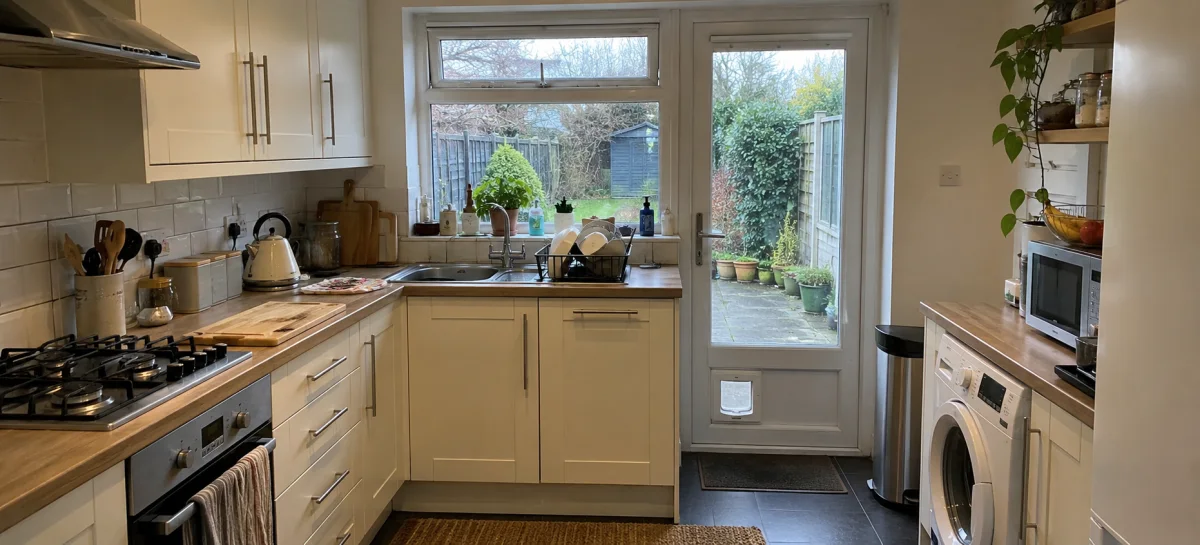 01 · ROOM CONTEXT
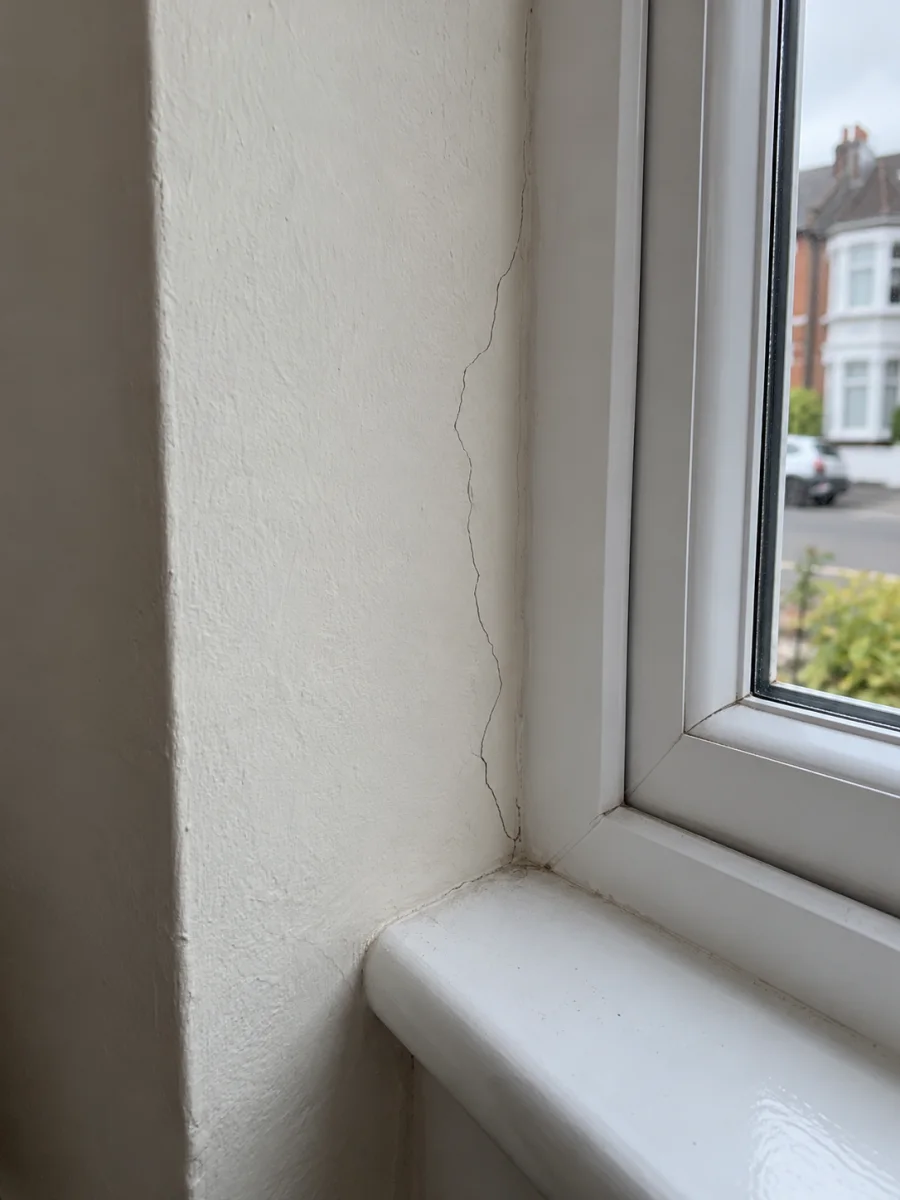 02 · DETAIL TO FOLLOW UP
Use your ordinary senses
Notice temperature, light, noise, odours, water marks, condensation, visible cracks, and how doors and windows feel when the agent permits you to operate them. Record neutral observations such as “brown mark below rear bedroom window”; avoid conclusions such as “roof leak” unless a qualified professional establishes that.
Questions to ask
A useful answer is specific enough to follow up. Where appropriate, ask whether supporting paperwork is available rather than relying on memory or a verbal summary.
- 01What is included in the sale?
- 02What recent work has been completed, and is documentation available?
- 03How do parking, access, shared spaces, or service charges work?
- 04Are there parts of the property we have not seen?
- 05Which questions need the seller, conveyancer, or surveyor to answer?
Write “the agent said the boiler was installed in 2019,” not “the boiler is from 2019,” until you have evidence that confirms it.
Immediately afterwards
Before comparing opinions, each person should record a short private reaction: what felt promising, what caused concern, and what remains unknown. Independent first impressions are easier to preserve before one confident voice sets the tone.
Then sort the record into three simple groups:
- Observed
- What you directly saw, heard, or photographed.
- Attributed
- What the agent, seller, or another person told you.
- Unknown
- What still needs evidence, a document, or professional advice.